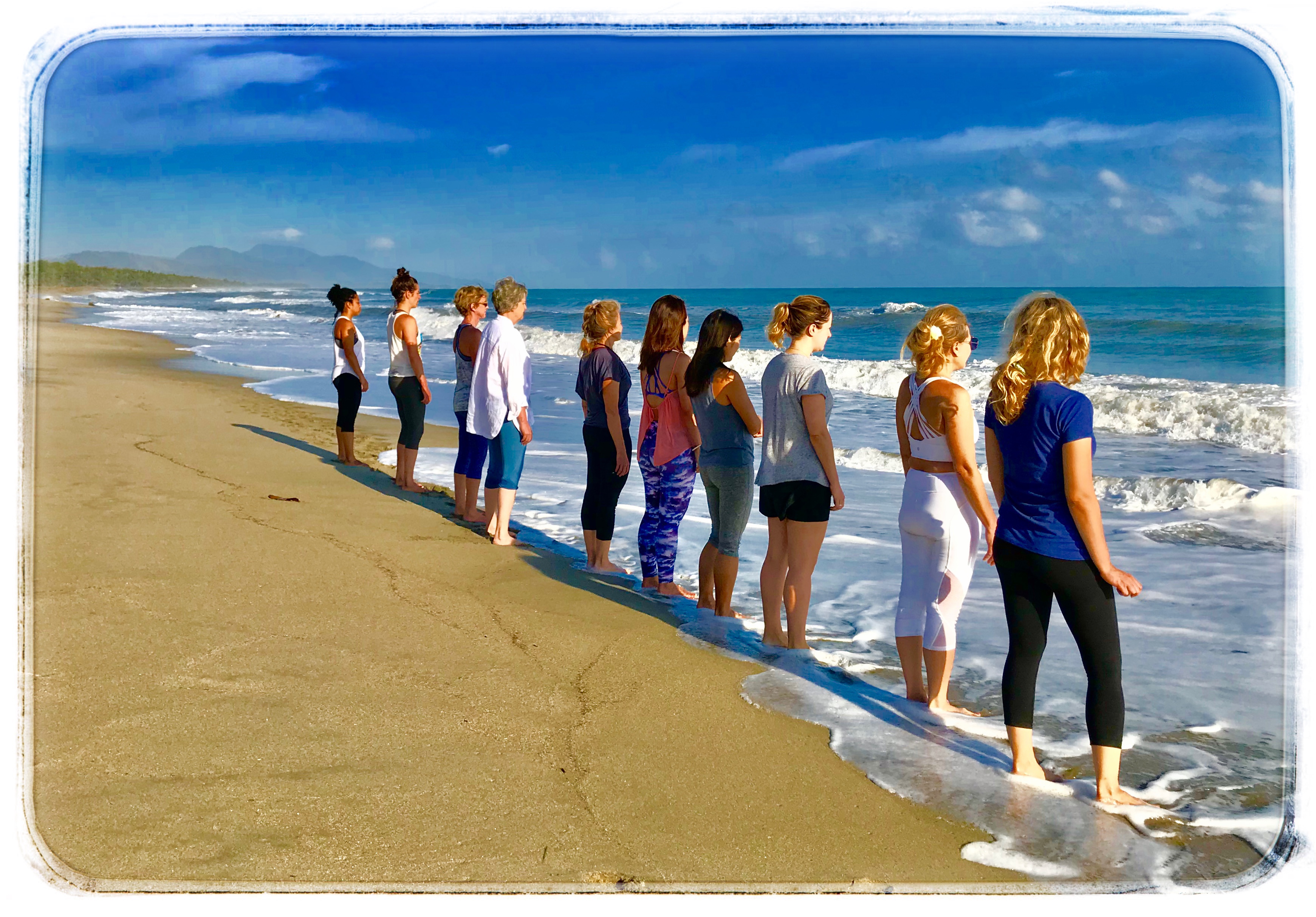
I often practice walking meditation, and there is always one as part of the retreats I lead!
Here are some simple instructions for a walking meditation. This can be done anywhere – even the crazy streets of NYC- but ideally you are surrounded by the beautiful sounds of nature: – if possible, leave your phone at home – if you are somewhere you can walk barefoot, like on sand or grass, leave your shoes at home too!
– if this is a group walking meditation, walk in one straight line, each person a few steps behind. Try as much as possible to follow the pace of the person ahead of you. – pick a mantra to match with your steps. I like to use lokah samastah sukhino bhavantu. As you walk silently repeat each word with each step – right foot lokah, left foot samastah, right foot sukhino, left foot bhavantu… – walk deliberately and slowly, heel, ball, toe; silently repeating the mantra. If you are barefoot, feel the different textures of the earth as you walk. – keep your chin parallel to the earth, gazing forward as you walk, allowing your peripheral vision to take in your surroundings. Notice what you may see, but without labeling or judging. Just take it all in. Continuing to repeat the mantra. – hear the sounds around you – waves crashing, birds chirping, insects, leaves rustling- but without labeling or judging in anyway – just notice – if you pass any other humans along the way, just nod and smile 😊 – when you come to the end of however far you are walking, stop for a few moments – 3 to 5 minutes – and just gaze outwards at your beautiful surroundings – continue to repeat these steps on the way back. Just before you finish pause again for a moment and close your eyes. After a few moments, Om 3x out loud.
Life is filled with stormy waters. Rivers are never still. Even when frozen, things are still moving around underneath. Sometimes it’s helpful to have someone to help steer the way.
In the Indian epic Rāmāyaṇam, Rāma, Sītā and Lakṣmaṇa began their 14 year exile in the forest by sneaking off in the middle of the night so as not to upset all those they would be leaving. Soon into their journey, they came to the Ganges River and called out to his friend Guha, the boatman, to ferry them across.
Rām asked Guha to take them across, but to also
wait an entire day before ferrying anyone else, so that no one could follow
them. Wanting to spend more time with Rām,
Guha tries to convince them to spend the night, but Rām wants to get a move on, and says he wants to leave now.
Trying again to spend more time with Rām, Guha suggests they eat some rice before they go, but Rām again orders the boat “RIGHT
NOW!”
As Guha readies the boat, he jokingly says to Rām, “I heard the dust of your feet
turned a stone into a woman. I hope you don’t turn my boat into a woman! Can I
at least wash your feet before you enter?”
Exasperated with this ordeal in just the first leg of their
14 year journey, Rām agrees to
allow Guha to wash his feet. They finally set off in the early morning before
everyone wakes up. Guha ferries Rām,
Sītā and Lakṣmaṇa across the Ganges river. Now that they have a
river separating them from the people of Ayodhyā, Ram takes a moment to hug Guha goodbye, and then Rāma, Sītā and Lakṣmaṇa enter the Daṃḍaka forest
to begin their exile.
Shiva’s first wife was named Sati, who was a princess. Her father, King Daksha, did not approve of their marriage AT ALL. He thought Shiva was a bit of a dirtbag – he has long dreadlocks and is covered in ash and tattoos. He hangs out in graveyards with ghouls and ghosts and is covered in snakes. He also smokes something called bhang, which is a marijuana derivative. Daksha did NOT think Shiva was prince material. Shiva and Sati got married anyway, and pretty much kept to themselves. They lived on Mount Kailash, on the outskirts of the kingdom, and let Daksha do his thing.
As part of Daksha’s political responsibilities, he was in
charge of making sure that all Vedic rituals were done properly. He was
throwing a large party (a yajña,
or ritualistic ceremony) where a goat was to be offered to the sacrificial
fire. Daksha invited EVERYONE in the kingdom, no matter who they were, EXCEPT
for Shiva and Sati. Sati was extremely upset, and told Shiva they should go to
the party anyway. Shiva thought she was crazy, and told her she could go by
herself if she wanted, but he was going to stay home and meditate.
Sati attended the party on her own, and when she arrived, Daksha started pointed and laughing at her, saying horrible things about her and Shiva, all of the attendees joined in the laughter, and it got worse and worse as the party went on. The yajña was a mockery in and of itself. The Lord of the Universe (Shiva) wasn’t even invited and was being made fun of. All Daksha truly cared about was showing off his wealth. There was no truth or honor behind this Vedic ritual. Sati became more and more upset, and decided to offer herself to the fire, and threw herself into the flames.
Shiva heard about the
death of Sati and was completely distraught. He was angry at Daksha and felt
guilty about letting Sati attend the party on her own, so out of pure anger, grief
and despair, he ripped out one of his dreadlocks, threw it to the earth, and
out from the earth rose Vīrabhadra
with a sword in his hands (in the form of Warrior I) (vīra = hero/warrior,
bhadra = friend).
Vīrabhadra is Shiva’s warrior friend, but also the embodiment
of all of Shiva’s emotional distress. He is also just a foot-soldier; he only
does what he is told, without any thought behind it, following orders without
second-guessing. Shiva sends Vīrabhadra to the yajña to avenge the death of Sati. Vīrabhadra again
bursts through the earth with sword in hand. Spots Daksha across the way and
points his sword at him (Warrior II) and chops off his head.
Shiva arrives soon after to check out the situation, and
immediately regrets what he’s done. Now Shiva does this a lot – he chops
people’s heads off out of anger, and only regrets his actions afterwards. He
always feels bad, and will bring them back to life with the head of the nearest
animal, which happens to be the goat that was never sacrificed. So now Daksha
is a part man, part goat. Shiva also chops heads off out of compassion, so that
we cut off the head of the ego, learn from our mistakes, and make changes for a
hopefully better future. Daksha now has to live with the head of a goat, but
hopefully does better this time around…
Shiva asks Vīrabhadra to pick Sati up out of the sacrificial
fire and they fly home (in the form of Warrior III) to give her a proper
burial. As they are flying home, pieces of Sati’s burnt body fall into the
ocean and across the land, and there are Shaivanists, or devotees of Shiva, who
have what they believe to be actual relics of Sati. Sati was reincarnated
thousands of years later as Parvati, who became Shiva’s second wife and Shakti
consort.
There is
a lot happening in this story, but mostly the characters are an allegory for
the human condition. How many times have you acted out of anger and regretted
your actions after? What would happen if you blindly followed orders without
questioning why you are doing what you are doing? How does it make you feel
when you hear unkind words? Are you practicing yoga just to show off your
skills, or is there a deeper meaning behind the practice?
The physical warrior āsanas can be quite challenging when held, and give us an opportunity to explore emotions that come up. Are you clenching your jaw, biting your lips, scrunching your eyebrows (your lips and eyebrows cannot help – they just make your face look pretty! They try really hard though 😉 Is your breathing jagged, or smooth? You cannot remove the mind from the body, and what you do with the body affects the mind. These practices involve the whole being. The warrior poses offer an opportunity to smooth this out – to find a grace an ease that allows us to embody a spiritual warrior rather than chopping through life.
All the money in the world won’t buy us happiness, but neither will ditching life to go meditate in a cave. There must be something in the middle – a way to live this life we have with an embodiment of happiness and joy – even with the annoying people on the streets of NYC, and loud teenagers on the subway 🙂
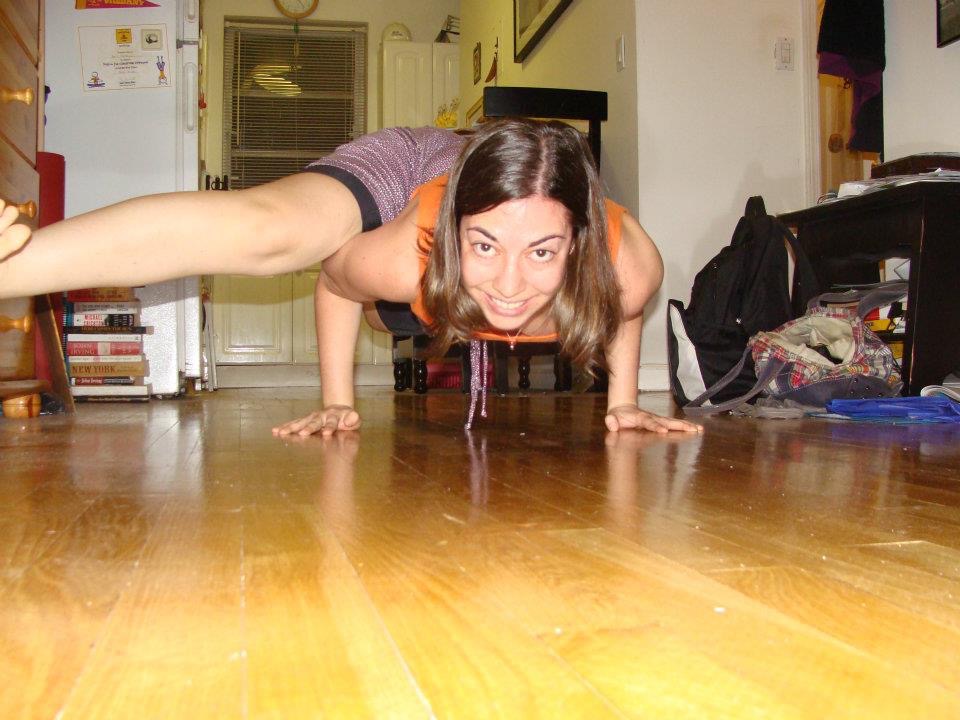
The arm balance eka pada kaundinyasana also requires a graceful balance – moving forward enough to lift the back leg off the floor, while still keeping the head and chest lifted – all while having the courage to possibly fall out of it!
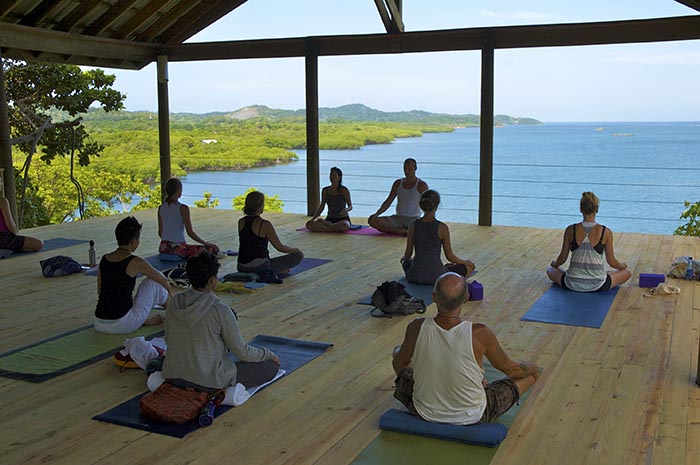
The next Jivamukti in Paradise retreat will be in Roatan, Honduras, January 11 -18, 2020.
A $500 non-refundable deposit is required to secure your spot.
aprildechagas@gmail.com for registration or questions
Pricing: Single $2400 Double $2100
What this includes (a lot!)
2 yoga classes/day and meditation with April
7 nights lodging
Welcome cocktail party
3 Vegetarian Meals/Day
Non-Alcoholic Beverages
Round-trip airport transfer in Roatan
A/C option in all rooms
WiFi
Daily Maid Service
Full Access to all of Retreat Center (see link below)
Unlimited Sea Kayaking
1 Snorkle Trip (some of the best snorkeling/diving in the world)
Las Sirenas sunset Cruise
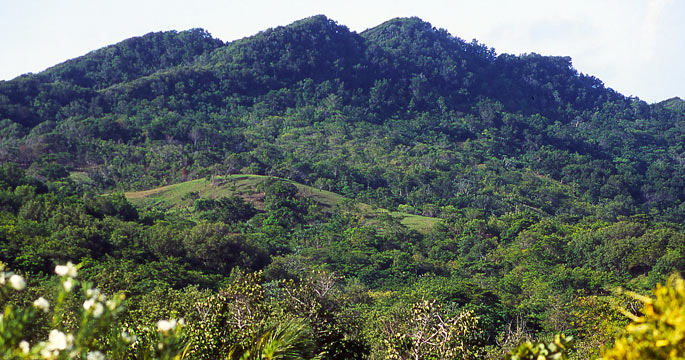
Hike to Picacho Peak
Not included:
Airfare
Alcoholic beverages
Staff tips
Additional excursions/spa treatments
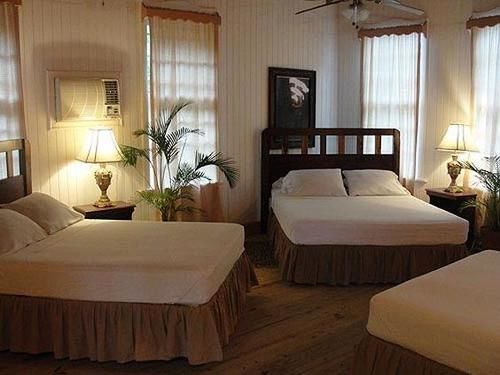
ROOMS AVAILABLE (11 Rooms Total):
• There are 4 single rooms (or Double if you are sharing a bed) • 4 more rooms that can be single (1 bed) or double (2 beds) • 3 rooms with two beds each
Additional info:
• Retreat Location- Paya Bay Resort https://www.payabay.com (I recommend looking on a computer rather than phone – easier to navigate) • Airport – fly to Roatan (RTB) • Travel time from airport to retreat center – 1 Hour • Closest Towns – 15 & 30 minutes away
We live in a technological world, which isn’t necessarily a bad thing! We have become interconnected with other human beings in ways most of us couldn’t have ever imagined! I wouldn’t be able to connect with most of you if not for this technological world! But there should be a happy medium…we cannot solely rely on technology, and we cannot go off to live in a cave somewhere to meditate all the time and ditch life (Bharati also spoke about this at Ananda Ashram this weekend)
Here are some thoughts on this by Thich Nhat Hanh, from his book The Sun My Heart:
“Meditators have always known that they must use their own eyes and the language of their own times to express their insight. Wisdom is a living stream, not an icon to be preserved in a museum. Only when a practitioner finds the spring of wisdom in his or her own life can it flow to future generations. All of us must keep the torch of wisdom glowing in order to light the path ahead.
Our insight and our language are inseparable from the times in which we live. For many years, the East followed the West down the path of technological and material development, to the point of neglecting its own spiritual values. In our world, technology is the main force behind economics and politics, but scientists in the West have begun to see something similar to what the spiritual disciplines of the East discovered long ago. If we can survive our times, the gap that separates science and spirituality will close, and East and West will meet one another on the path to discover true mind. We can start working towards convergence right now, using our own daily mindful lives.”
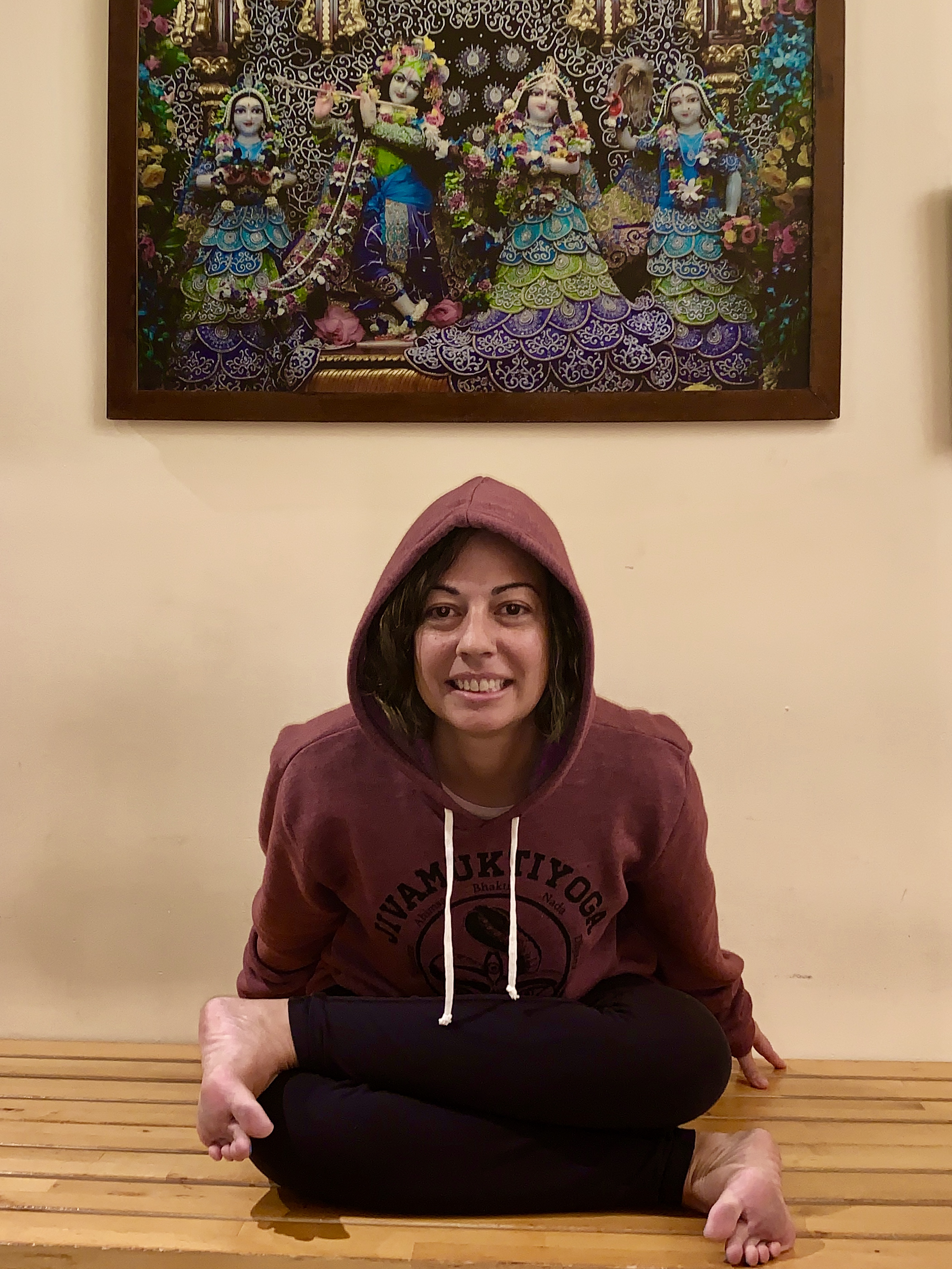
If you do too much too quickly, your fire will burn out. If you take on more then you can handle, your fire will burn out. If you try to shove your knee to your ankle in agnistambhasana before it’s ready, your fire (and your knee!) will burn out! Take things slow, breath deep and take it all in. Practice and all is coming.
Bharadvāja was a dedicated yoga student and devoted his entire life to studying the vedas. All he did, all day, every day, was study. He studied so much, that he exhausted an entire lifetime doing so.
Upon his
rebirth, Bharadvāja did the same thing all over again. He thought the more he
studied, the more likely it was that he’d break the cycle of saṃsāra, the continuous circle of birth, death, and rebirth.
He again exhausted an entire lifetime just studying.
In his third lifetime, Bharadvāja again did the
same thing. At this point people all over the kingdom would whisper to each
other about the weird hermit who never left his home and only studied yoga. He
was giving yoga a bad name! Who wants to study yoga if your just trapped inside
all day reading thousand-paged books and never having any fun? He had no
family, no friends, and was always alone. What kind of life is it if you can’t
share it with others?
At the
end of this third lifetime, Shiva came to Bharadvāja at his deathbed. Bharadvāja
thought that this was finally it! That he knew the vedas so well that he would
not have to be re-born and could live with the Gods and Goddesses. But oh was
he wrong! Shiva scolded him (in a loving gentle way), and asked what on earth Bharadvāja
thought he was doing? He spends all this time studying, but what good is all
this yogic knowledge if he isn’t sharing it with others? Why keep the joy of
yoga to himself when he could help others find joy and happiness as well?
In his
fourth lifetime, Bharadvāja finally understood. Rather than living his hermit
lifestyle, he became a teacher. And not only was he a teacher, but he also had
more friends than he could have ever imagined. Rather than finding yoga in just
books, he was living it.
At the end of this lifetime, Shiva again came to visit Bharadvāja. “You did it,” Shiva exclaimed! “You finally get it! You no longer have to be subjected to karmas and re-birth. Come let’s go, you’ll love it in “The Good Place.” But Bharadvāja refused, instead choosing to again be re-born as a teacher, deciding that living this great joyful life was all he needed.
King
Kaushika had absolutely EVERYTHING. He was extremely wealthy, had the largest
army in the land, and had anything you could possibly think of at the tip of
his fingers.
One day,
while traveling with his large army, he came across the small, humble hermitage
of the sage Vaśiṣṭha. They stopped to pay their respects, and as was customary,
Vaśiṣṭha invited them to stay for a meal. Kaushika refused, saying there was no
way that Vaśiṣṭha’s small home could provide enough food for the entire army. Vaśiṣṭha
insisted, and Kaushika finally agreed, thinking they would be lucky if they
even received a piece of bread each.
As the
evening went on, more and more food kept coming out, and the entire army was
completely satisfied. Kaushika was baffled, and asked Vaśiṣṭha how this was
possible. Vaśiṣṭha told Kaushika that he had a magical cow named Nadini, that
could provide whatever was asked for. Kaushika had never heard of a magical
cow! He didn’t have one and he has everything, and demanded Vaśiṣṭha hand over
the cow. Vaśiṣṭha was appalled. Nandini was part of the family, and Vaśiṣṭha
could never give a family member away. Kaushika demanded Vaśiṣṭha give him the
cow, or else he would declare war and just take the cow. Vaśiṣṭha said “Fine,
go right ahead.” Kaushika thought Vaśiṣṭha was crazy. How could this little
yogic sage defeat the largest army in the land? He couldn’t go back on his
word, and so they went to war.
Battle
after battle Vaśiṣṭha consistently won until Kaushika and his army couldn’t
take it anymore and surrendered. Baffled again, Kaushika wondered how Vaśiṣṭha
was able to defeat him. He realized there must be more to this yoga stuff than
he realized, decided to give up everything except what he deemed essential, and
went off to study yoga. After many, many years of study King Kaushika also
became a yogic sage. His took the name Viśvāmitra (Viś = expansive/universe;
mitra = friend) and dedicated his life to taking care of others and spreading
the teachings of yoga.
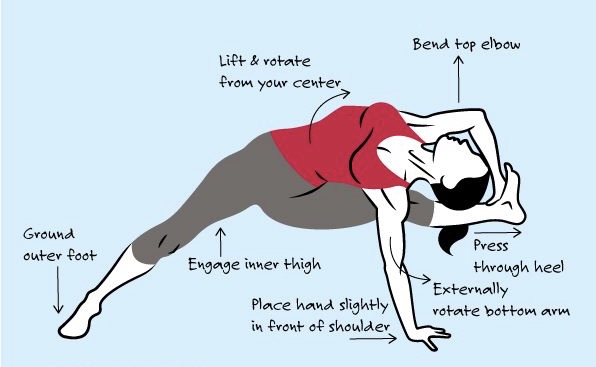
Similar to King Kaushika
having everything, viśvāmitrāsana also has a bit of everything! It is a side
bend, shoulder opener, hip opener, standing āsana and arm balance all in one!
You can not take this one by force! What’s interesting is the elements of vaśiṣṭhāsana
(side plank) are also here, with the arm holding the foot representing the bow
and arrow of war. Slow and steady wins this battle, and with patience you will
find expansion and openess to all.
Śiva and Viṣṇu were hanging out… Viṣṇu was sitting on his serpent couch ĀdiŚeṣa, who is also sometimes referred to as Anantā. They were listening to the beat of Śiva’s ḍamaru drum, and Śiva was performing his cosmic dance. Viṣṇu became so captivated by the dance of Śiva that he started to vibrate to the rhythm – becoming heavier and heavier, starting to crush ĀdiŚeṣa.
When the
dance was over, the weight was lifted. ĀdiŚeṣa was so amazed by this by this dramatic
change he expressed a wish for legs so he can learn to dance.
At the
same exact time, Gonika, a dovited yogini, was praying for a worthy son to pass
along her knowledge of yoga. Viṣṇu, who is the sustainer of the world and yogic
knowledge, sent ĀdiŚeṣa down to earth. He fell from the heavens into the palms
of Gonika (legs and all!) and she named her new son Patañjali
(pat = to fall; añjali = palms).
Patañjali grew up to be a great vedic scholar. He went
through thousands and thousands of pages of veda (so we didn’t have to! Thanks Patañjali!),
took what he thought was the most essential, and strung them together. He
compiled three books: Purification of Speech, Purification of Body and
Purification of Mind. The Purification of Mind is what we commonly refer to as The
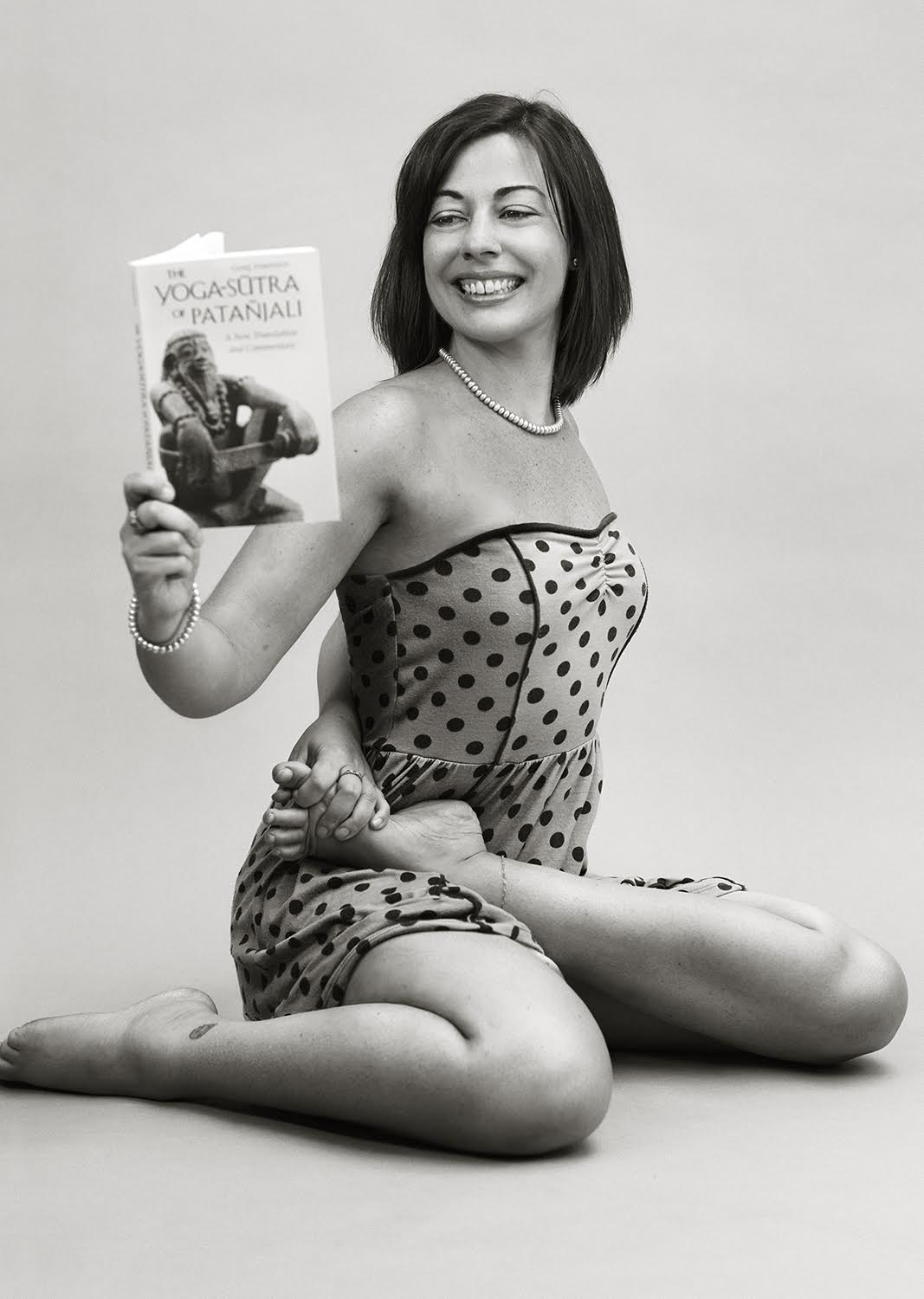
Yoga Sutras of Patañjali.
Anantā means infinite or endless, and Ādi means first. It refers to the state of yoga – timeless, beyond birth, death, and all changes in between—a limitless state of joy and contentment. Anantāsana helps us cultivate this sense of contentment and equanimity. It requires a bit of balance, flexibility, and core strength – all aspects we need in our every day lives!

















 april dechagas