Yoga

I just can’t wait to Om

Sometimes there is this moment when I am in class, and the teacher holds a longer pause than usual before the second Om, and I’m waiting, and waiting, and almost want to start the next Om for them, because I just CAN’T wait! It’s like, is it now? Not yet? I want to Om!

But the thing is, that long pause is supposed to be there. There are four parts to the sound of Om: Aaaaah, Uuuuuu, Mmmmm, and the silence that comes after. And although hearing the sound of Om is special, hearing the silence  and feeling the vibration is even more so. This is the sound of yoga.

I have two thoughts about this:

1)Many of us are always looking to the future. We just can’t wait for the next thing. The new spring line of clothing. The newest technology. The new season of Game of Thrones. Predicting what is going to happen on the new Game of Thrones. Rather than being in the present moment, we are always looking for the next best thing. This happens in an asana class also – thinking you know what is coming next in a sequence (because trikoṇāsana HAS to come before vīrabhadrāsana II, right?) Or being one step ahead of the teacher during sūrya namaskāra. I’m ready for the next Om! Where is it??

2) In discussing this with a friend, she also brought up the idea of not being able to handle the silence. Of being afraid of the silence. Of having a moment to actually hear your constant thoughts, or citta vṛttis. We live in an age of constant worry (about the past and future) and sustained din, especially if you live in an urban area (where there is worry and din.) If you don’t live in an urban area, there is still the always available and attention grabbing phones, music, tv, etc. For many, silence is scary. It is an unknown entity. Many are afraid of the unknown, and therefore try to predict the future (see #1. It’s all just a vicious circle.)

It is not a true silence we are seeking though. Well, eventually it is. But first, according to the Hatha Yoga Pradīpikā, we want to hear Nāda. I am not referring to the Spanish word that means nothing, but it’s a nice resemblance. Nāda is the sound of yoga, the sound of the universe, or essentially, Om. The Hatha Yoga Pradīpikā (HYP) is a book that outlines the physical practices that will allow us to achieve yoga. The idea of nāda does not appear until the very end of the book – saving the best for last right? All of the physical yogic practices that we do both in an asana class and outside in the “real” world, are to prepare us to hear nāda. Chanting Om gives us a little taste of what nāda is – especially that 4th part of om, the silence and vibration you feel after making the audible sounds.

In regards to eventually hearing nothing at all (nada in the Spanish sense!), the HYP also states that in Samādhi, not even Nāda is heard. With that, I’ll close with two verses from Patañjali’s Yoga Sūtra:

PYS 1.1: atha yoga-anuśāsanam Now (right now! Not before or after! Now!) this is Yoga as I have observed it in the natural world.

PYS 1.2 yogaś-citta-vṛtti-nirodhaḥ Yoga is when the fluctuations of the mind cease to exist (I am paraphrasing.)

Don’t be afraid to be in the present moment. Don’t be afraid of the silence. Don’t be afraid to sit with the silence. To listen to the sound of silence. To FEEL the sound of yoga. SILENCE SPEAKS VOLUMES. 

theOm


Categories: Hatha Yoga Pradipika, jivamukti, om, Yoga, Yoga Sutras | Tags: , , , , , , | Leave a comment

Be the change you want to see in the world

Bhagavad Gita III.21

yad-yad ācarati śreṣṭhas / tad-tad evetaro janaḥ / sa yat pramāṇaḿ kurute / lokas-tad-anuvartate

“A great person leads by example, setting standards that are followed by others all over the world.”

– Translation by Sharon Gannon

The great leaders of the world – Martin Luther King Jr., Mahatma Gandhi, Mother Teresa, Nelson Mandela, Rosa Parks, the Dalai Lama – all share certain characteristics. They are clear communicators as well as great listeners. Each has a firm and steady grounding that reflects an unwavering commitment to their cause. They inspire and empower. They are also confident, honest and discerning. There is another quality each great leader has, a quality that perhaps outshines the others – humility.

According to Vedic scripture we are currently living in the Kali Yuga – an era of conflict and struggle – and great leaders are especially needed. As yogis, it is our responsibility to lead by example, to be spiritual activists.  If we want to see peace and true happiness in the world and live on a thriving Earth where all beings are happy and free, then we need to live the kind of life that we want to see.

In an article from Success magazine, Jim Rohn says, “Humility is almost a God-like word. A sense of awe. A sense of wonder. An awareness of the human soul and spirit. Humility is the grasp of the distance between us and the stars, yet having the feeling that we are part of the stars.”  Humility is seeing yourself in others; it is being able to see all life as holy.

The word humility is derived from the Latin word humilis, which is translated as “grounded” or “from the Earth,” since the word humilis itself originates from humus (Earth).  We can associate the concept of humility to “sthira-sukham-āsanam” – PYS II.46 (“The connection to the earth should be steady and joyful” – Sharon Gannon). Being firmly connected and balanced with the Earth is also an expression of “tat twam asi” (You are that) – Chandogya Upanishad, the knowing that you are the same as all life on this Earth. A great yogi has the humility to understand that they are the same as all that exist on Earth. The Earth and its natural resources support life, so it is our responsibility to protect and equally support the Earth. A yogi has the responsibility of living life in the most compassionate way possible, following the dictates of the Yamas: ahiṃsā, satya, asteya, brahmacharya, and aparigraha (non-violence, truthfulness, non-stealing, sexual responsibility and greedlessness) – YS II.30. When we embody these five ideals as the way of life, others will see how happy and free we are, and then they will follow suit.

A great yogi is the embodiment of what it means to stand for what is right. A great yogi offers strength to others so that they too can learn how to be steady and joyful, to be humble and to be the change they want to see in the world. It is time for humanity to progress in a different way, to rediscover that we are same as the stars and shine just as bright, and to lead by example, setting standards that are followed by others all over the world.

Categories: Bagavad Gita, jivamukti, Sanskrit, Yoga | Leave a comment

Aerial Arm Balance Workshop in March!

AerialArmBalances

Categories: jivamukti, Workshops, Yoga | Leave a comment

I passed! Woo hoo!

I am so excited and blessed to announce that I passed the advanced board exam at Jivamukti this weekend!!!!! I have an abundance of gratitude for all of my teachers and could not have done this without you! Special thank you to Gayatri Sandhi Ferreira for all of your love, support and ass kicking . ToYogeswari Azahar, David Life and Sharon Gannon for all of your teachings and support, over the last year especially. And Lauren Krauze for being an extra set of eyes on my writing, and poking my quads every time I’m in headstand . I love you all! Hari Om!

laughing

Categories: jivamukti, Yoga | Tags: , | Leave a comment

The Key to Happiness: Patanjali’s Yoga Sutra

I am super excited to be leading this workshop! Sign up online here: http://clients.mindbodyonline.com/classic/ws?studioid=5599&stype=-8&sTG=20&sVT=22&sView=day&sTrn=100000323&sDate=1/18/2015

April's Yoga Sutra Workshop2 (1)

Categories: Sanskrit, Workshops, Yoga, Yoga Sutras | Leave a comment

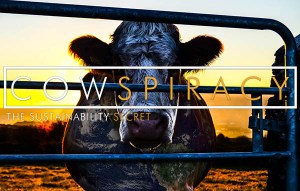
Cowspiracy – You cannot call yourself an environmentalist and support animal agriculture

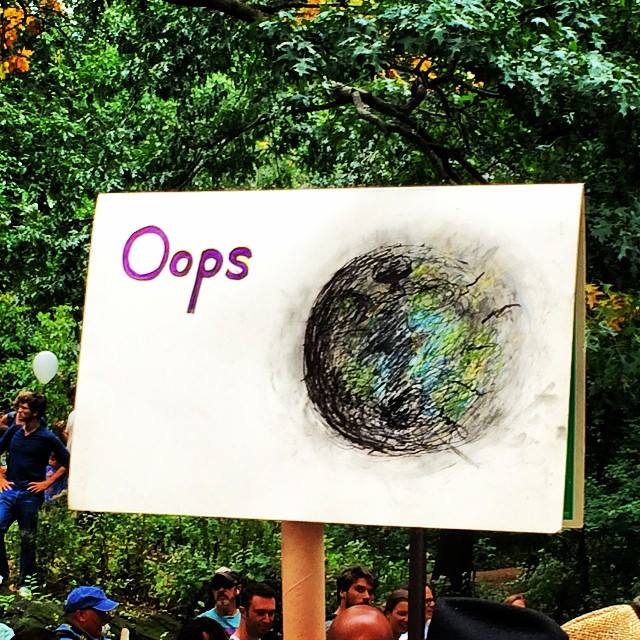
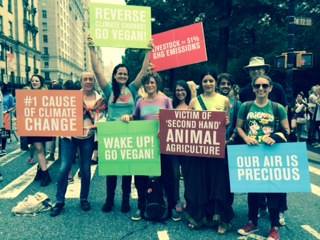
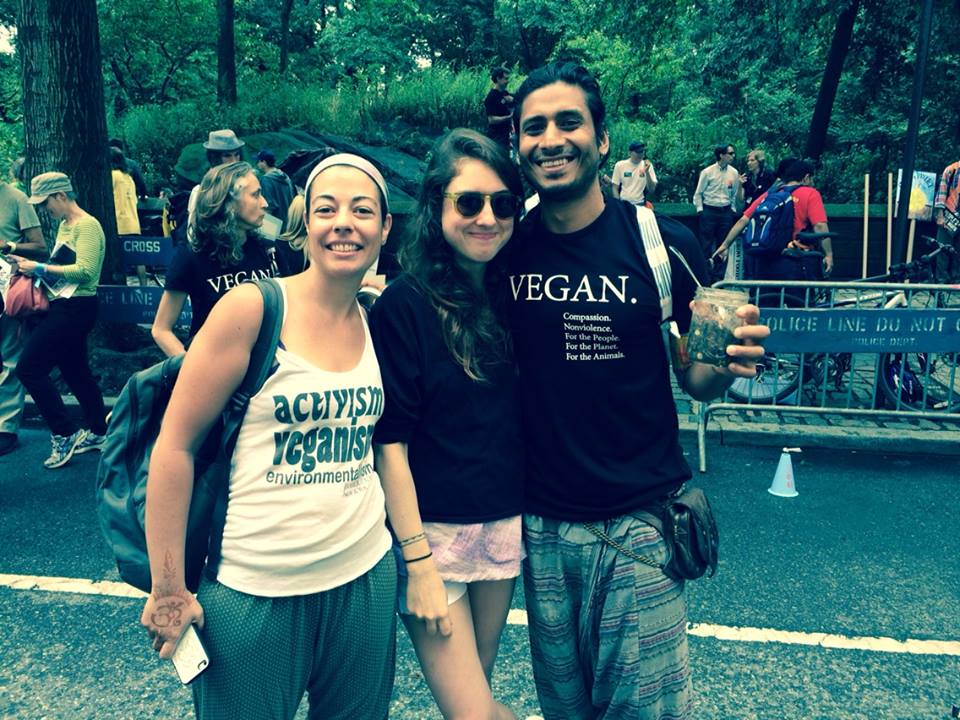
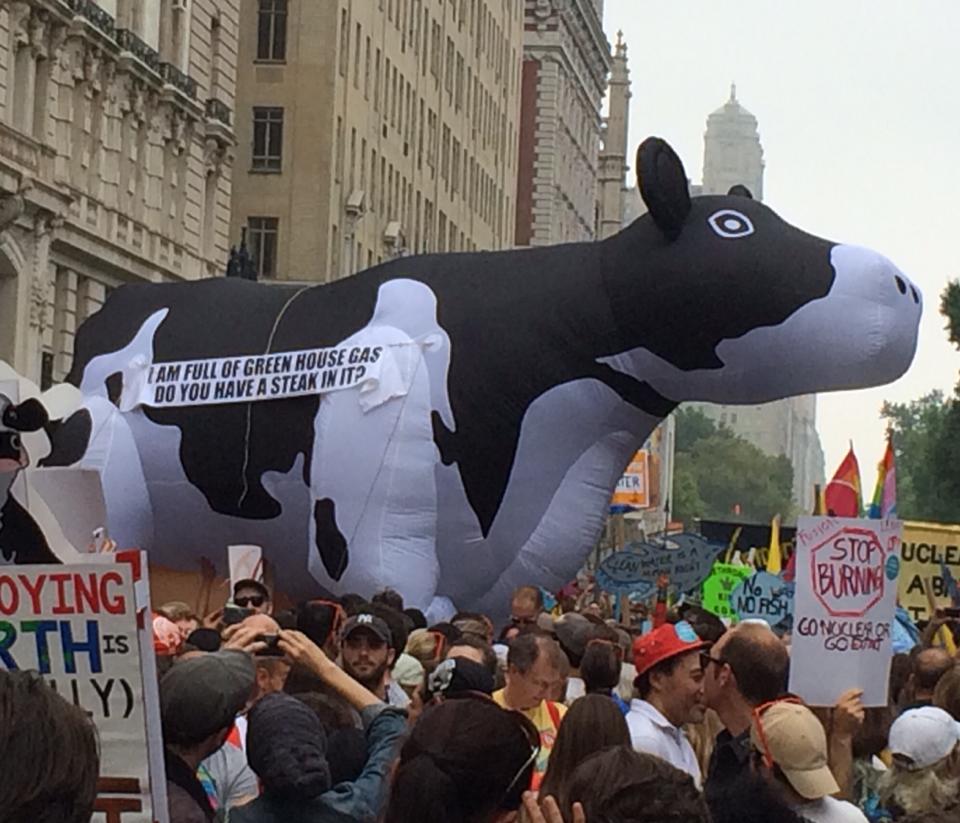
This past Sunday, September 21st, 2014, I joined  400,00 others in the People’s Climate March in NYC. It was the largest of it’s kind, and amazing that so many people care about the future of this Earth we live on. Unfortunately, it was covered by only one news network, and only for about 23 seconds.

One of the reasons for the lack of coverage is very same reason why I marched: our major “environmental” organizations, like GreenPeace, 350.org, etc., refuse to acknowledge the biggest cause of our environmental decline: the animal agriculture industry. The farming industry in the United States essentially runs our government. This industry has so much power in our country, that even high profile people like former Vice-President Al Gore, are afraid to talk about it. In fact, animal rights and environmental activists are the #1 offenders on the FBI watch list, rather than the actual bad guys.

It is estimated that at the rate our population is growing and the amount our word eats animal based food, we will only be around another 50 years or so. In 50 years I will be 84…I’d like to see the world last a bit longer than that! The farming industry is not only affecting the air and water we need to survive, but also killing off our natural wildlife. If you get excited when you see a fox or bear while on a hike, you better take advantage of it now, because natural wildlife won’t be here much longer.

There are a few things you can do:

The first is to educate yourself: watch the movie Cowspiracy. The movie highlights the fact that the largest cause of environmental decline is being hidden by all major environmental organizations, and our government. You can learn more about it here: http://cowspiracy.com/.

Cowspiracy

#2: Eat a plant based diet. It is completely possible to live a healthy, happy life on a vegan diet. Even if you are pregnant and/or raising children. Milk produced by cows is for their calfs to grow up into big strong cows! And if you love ice cream and cheese, you can get amazing tasting nut based ice cream or tapioca based cheese – it tastes the same, I swear! And you don’t even have to eat soy if you don’t want to! Sharon Gannon, co-founder of Jivamukti Yoga School, just released a new cook book called Simple Recipes for Joy. There are over 200 vegan recipes in the book, even things like meatballs and spaghetti and manhattan clam chowder! I happened to have helped make the food in pictures in the book and tested recipes before publishing! You can order it here: Simple Recipes for Joy

OLYMPUS DIGITAL CAMERA

book-cover

#3: Sign this petition to have the movie Cowspiracy aired on CNN

case_lg_banner_2

Please feel free to comment or ask questions. Here are some facts that are posted on the Cowspiracy website, all completely research based. I have a copy of the Cowspiracy movie if you are in the NY area and want to borrow it.

LOVE, PEACE & VEGETABLES!

FACT CHECK


Director’s Note:

The science and research done on the true impacts of animal agriculture is always growing. The statistics used in the film were based off the information below.

We will continually update this list with further resources as they become available.

Although there may be fluctuations in numbers from year to year and from researcher to researcher, the fact remains that animal agriculture, as a whole, requires tremendous amounts of resources and is a leader in environmental degradation.

Animal agriculture is responsible for 51 percent of greenhouse gas emissions, more than all transportation combined. [i]

Fao.org. Spotlight: Livestock impacts on the environment.

http://www.fao.org/ag/magazine/0612sp1.htm

Transportation is responsible for 18% of all greenhouse gas emissions.

Greenhouse gas emissions from this sector primarily involve fossil fuels burned for road, rail, air, and marine transportation.

Environmental Protection Agency. “Global Emissions.”

http://www.epa.gov/climatechange/ghgemissions/global.html

Livestock and their byproducts actually account for at least 32,000 million tons of carbon dioxide (CO2) per year, or 51% of all worldwide greenhouse gas emissions.

Goodland, R Anhang, J. “Livestock and Climate Change: What if the key actors in climate change were pigs, chickens and cows?”

WorldWatch, November/December 2009. Worldwatch Institute, Washington, DC, USA. Pp. 10–19.

http://www.worldwatch.org/node/6294

Methane is 25-100 times more destructive than CO2.

“Improved Attribution of Climate Forcing to Emissions.” Science Magazine.

http://www.sciencemag.org/content/326/5953/716.figures-only

Methane has a global warming power 86 times that of CO2.

NASA. “Methane: Its Role as a Greenhouse Gas.” Jet Propulsion Laboratory.

http://www.jpl.nasa.gov/education/pdfs/podest_ghg.pdf

Livestock is responsible for 65% of all emissions of nitrous oxide – a greenhouse gas 296x more destructive than carbon dioxide and which stays in the atmosphere for 150 years.

“Livestock’s Long Shadow: Environmental Issues and Options.” Food and Agriculture Organization of the United Nations. 2006.

http://www.fao.org/docrep/010/a0701e/a0701e00.htm

Fracking (hydraulic fracturing) water use ranges from 70-140 billion gallons annually.

“Draft Plan to Study the Potential Impacts of Hydraulic Fracturing on Drinking Water Resources.” EPA Office of Research and Development. United States Environmental Protection Agency, 2011.

http://www2.epa.gov/sites/production/files/documents/HFStudyPlanDraft_SAB_020711.pdf

Animal agriculture use ranges from 34-76 trillion gallons of water annually. [ii]

Pimentel, David, et al. “Water Resources: Agricultural And Environmental Issues.” BioScience 54, no. 10 (2004): 909-18.

http://bioscience.oxfordjournals.org/content/54/10/909.full

Barber, N.L., “Summary of estimated water use in the United States in 2005: U.S. Geological Survey Fact Sheet 2009–3098.”

http://pubs.usgs.gov/fs/2009/3098/

Agriculture is responsible for 80-90% of US water consumption.

“USDA ERS – Irrigation & Water Use.” United States Department of Agriculture Economic Research Service. 2013.

http://www.ers.usda.gov/topics/farm-practices-management/irrigation-water-use/background.aspx

Growing feed crops for livestock consumes 56% of water in the US.

Jacobson, Michael F. “More and Cleaner Water.” In Six Arguments for a Greener Diet: How a More Plant-based Diet Could save Your Health and the Environment.
Washington, DC: Center for Science in the Public Interest, 2006.

http://www.cspinet.org/EatingGreen/pdf/arguments4.pdf

One hamburger requires 660 gallons of water to produce – the equivalent of 2 months’ worth of showers. [iii]

Catanese, Christina. “Virtual Water, Real Impacts.” Greenversations: Official Blog of the U.S. EPA. 2012.

http://blog.epa.gov/healthywaters/2012/03/virtual-water-real-impacts-world-water-day-2012/

“50 Ways to Save Your River.” Friends of the River.

http://www.friendsoftheriver.org/site/PageServer?pagename=50ways

2,500 gallons of water are needed to produce 1 pound of beef.

Robbins, John. “2,500 Gallons, All Wet?” EarthSave

http://www.earthsave.org/environment/water.htm

Meateater’s Guide to Climate Change & Health.” Environmental Working Group.

http://www.ewg.org/meateatersguide/interactive-graphic/water/

“Water Footprint Assessment.” University of Twente, the Netherlands.

http://www.waterfootprint.org

Oppenlander, Richard A. Food Choice and Sustainability: Why Buying Local, Eating Less Meat, and Taking Baby Steps Won’t Work. Minneapolis, MN: Langdon Street, 2013. Print

477 gallons of water are required to produce 1 pound of eggs; 900 gallons of water are needed for cheese.

“Meateater’s Guide to Climate Change & Health.” Environmental Working Group.

http://www.ewg.org/meateatersguide/interactive-graphic/water/

1,000 gallons of water are required to produce 1 gallon of milk.

“Water trivia facts.” United States Environmental Protection Agency.

http://water.epa.gov/learn/kids/drinkingwater/water_trivia_facts.cfm#_edn11

5% of water in the US is used by private homes.
55% of water in the US is used for animal agriculture.

Jacobson, Michael F. “More and Cleaner Water.” In Six Arguments for a Greener Diet: How a More Plant-based Diet Could save Your Health and the Environment. Washington, DC: Center for Science in the Public Interest, 2006.

http://www.cspinet.org/EatingGreen/pdf/arguments4.pdf

Oppenlander, Richard A. Food Choice and Sustainability: Why Buying Local, Eating Less Meat, and Taking Baby Steps Won’t Work. Minneapolis, MN: Langdon Street, 2013. Print.

The meat and dairy industries combined use nearly 1/3 (29%) of all the fresh water in the world today.

“Freshwater Abuse and Loss: Where Is It All Going?” Forks Over Knives.

http://www.forksoverknives.com/freshwater-abuse-and-loss-where-is-it-all-go

Livestock covers 45% of the earth’s total land.

Thornton, Phillip, Mario Herrero, and Polly Ericksen. “Livestock and Climate Change.” Livestock Exchange, no. 3 (2011).

Click to access IssueBrief3.pdf

Animal agriculture is the leading cause of species extinction, ocean dead zones, water pollution [iv], and habitat destruction.

Oppenlander, Richard A. Food Choice and Sustainability: Why Buying Local, Eating Less Meat, and Taking Baby Steps Won’t Work. . Minneapolis, MN : Langdon Street, 2013. Print.

“What’s the Problem?” United States Environmental Protection Agency.

http://www.epa.gov/region9/animalwaste/problem.html

“Livestock’s Long Shadow: Environmental Issues and Options.” Food and Agriculture Organization of the United Nations. 2006.

http://www.fao.org/docrep/010/a0701e/a0701e00.htm

“Fire Up the Grill for a Mouthwatering Red, White, and Green July 4th.” Worldwatch Institute.

http://www.worldwatch.org/fire-grill-mouthwatering-red-white-and-green-july-4th

Oppenlander, Richard A. “Biodiversity and Food Choice: A Clarification.” Comfortably Unaware. 2012

http://comfortablyunaware.com/blog/biodiversity-and-food-choice-a-clarification/

“Risk Assessment Evaluation for Concentrated Animal Feeding Operations.” U.S. Environmental Protection Agency – Office of Research and Development. 2004.

http://nepis.epa.gov/Exe/ZyPURL.cgi?Dockey=901V0100.txt

Every minute, 7 million pounds of excrement are produced by animals raised for food in the US.
This doesn’t include the animals raised outside of USDA jurisdiction or in backyards, or the billions of fish raised in aquaculture settings in the US. [v]

“What’s the Problem?” United States Environmental Protection Agency.

http://www.epa.gov/region9/animalwaste/problem.html

“How To Manage Manure.” Healthy Landscapes.

http://www.uri.edu/ce/healthylandscapes/livestock/how_manure_overall.htm

335 million tons of “dry matter” is produced annually by livestock in the US.

“FY-2005 Annual Report Manure and Byproduct Utilization National Program 206.”
USDA Agricultural Research Service. 2008.

http://www.ars.usda.gov/research/programs/programs.htm?np_code=206&docid=13337

A farm with 2,500 dairy cows produces the same amount of waste as a city of 411,000 people. [vi]

“Risk Assessment Evaluation for Concentrated Animal Feeding Operations.” U.S. Environmental Protection Agency – Office of Research and Development. 2004.

http://nepis.epa.gov/Exe/ZyPURL.cgi?Dockey=901V0100.txt

3/4 of the world’s fisheries are exploited.

“Overfishing: A Threat to Marine Biodiversity.” UN News Center.

http://www.un.org/events/tenstories/06/story.asp?storyid=800

“General Situation of World Fish Stocks.” United Nations Food and Agriculture Organization (FAO).

http://www.fao.org/newsroom/common/ecg/1000505/en/stocks.pdf

90 million tons of fish are pulled from our oceans each year. [vii]

“World Review of Fisheries and Aquaculture.” UNITED NATIONS FOOD AND AGRICULTURE ORGANIZATION (FAO). 2012.

http://www.fao.org/docrep/016/i2727e/i2727e01.pdf

For every 1 pound of fish caught, an average of 5 pounds of unintended marine species are caught and discarded as by-kill. [viii]

“Discards and Bycatch in Shrimp Trawl Fisheries.”
UNITED NATIONS FOOD AND AGRICULTURE ORGANIZATION (FAO).

http://www.fao.org/docrep/W6602E/w6602E09.htm

As many as 40% (63 billion pounds) of fish caught globally every year are discarded.

Goldenberg, Suzanne. “America’s Nine Most Wasteful Fisheries Named.” The Guardian.

http://www.theguardian.com/environment/2014/mar/20/americas-nine-most-wasteful-fisheries-named

Scientists estimate as many as 650,000 whales, dolphins and seals are killed every year by fishing vessels.

Goldenberg, Suzanne. “America’s Nine Most Wasteful Fisheries Named.” The Guardian.

http://www.theguardian.com/environment/2014/mar/20/americas-nine-most-wasteful-fisheries-named

100 million tons of fish are caught annually.

Montaigne, fen. “Still waters: The global fish crisis.” National Geographic.

http://ocean.nationalgeographic.com/ocean/global-fish-crisis-article/

Fish catch peaks at 85 million tons.

“World Review of Fisheries and Aquaculture.” UNITED NATIONS FOOD AND AGRICULTURE ORGANIZATION (FAO). 2012.

http://www.fao.org/docrep/016/i2727e/i2727e01.pdf

Animal agriculture is responsible for 91% of Amazon destruction.

Oppenlander, Richard A. Food Choice and Sustainability: Why Buying Local, Eating Less Meat, and Taking Baby Steps Won’t Work. . Minneapolis, MN : Langdon Street, 2013. Print.

Margulis, Sergio. Causes of Deforestation of the Brazilian Rainforest. Washington: World Bank Publications, 2003.

https://openknowledge.worldbank.org/handle/10986/15060

1-2 acres of rainforest are cleared every second.

“Avoiding Unsustainable Rainforest Wood.” Rainforest Relief.

http://www.rainforestrelief.org/What_to_Avoid_and_Alternatives/Rainforest_Wood.html

Facts about the rainforest.

http://www.savetherainforest.org/savetherainforest_007.htm

Rainforest facts.

http://www.rain-tree.com/facts.htm

The leading causes of rainforest destruction are livestock and feedcrops.

“Livestock impacts on the environment.” Food and agriculture organization of the United Nations (fao). 2006.

http://www.fao.org/ag/magazine/0612sp1.htm

110 plant, animal and insect species are lost every day due to rainforest destruction.

“Rainforest statistics and facts.” Save the amazon.

http://www.savetheamazon.org/rainforeststats.htm

Oppenlander, Richard A. Food Choice and Sustainability: Why Buying Local, Eating Less Meat, and Taking Baby Steps Won’t Work. Minneapolis, MN: Langdon Street, 2013. Print.

26 million rainforest acres have been cleared for palm oil production. [ix]

“Indonesia: palm oil expansion unaffected by forest moratorium.” USDA Foreign Agricultural Service. 2013.

http://www.pecad.fas.usda.gov/highlights/2013/06/indonesia/

136 million rainforest acres cleared for animal agriculture.

“AMAZON DESTRUCTION.” MONGA BAY.

http://rainforests.mongabay.com/amazon/amazon_destruction.html

1,100 activists have been killed in Brazil in the past 20 years. [x]

Batty, David. “Brazilian faces retrial over murder of environmental activist nun in Amazon.” The Guardian. 2009.

http://www.theguardian.com/world/2009/apr/08/brazilian-murder-dorothy-stang

Cows produce 150 billion gallons of methane per day. [xi]

Ross, Philip. “Cow farts have ‘larger greenhouse gas impact’ than previously thought; methane pushes climate change.” International Business Times. 2013.

http://www.ibtimes.com/cow-farts-have-larger-greenhouse-gas-impact-previously-thought-methane-pushes-climate-change-1487502

130 times more animal waste than human waste is produced in the US – 1.4 billion tons from the meat industry annually. 5 tons of animal waste is produced for every person. [xii]

Animal agriculture: waste management practices. United States General Accounting Office.

http://www.gao.gov/archive/1999/rc99205.pdf

2-5 acres of land are used per cow.

Oppenlander, Richard A. Food Choice and Sustainability: Why Buying Local, Eating Less Meat, and Taking Baby Steps Won’t Work. 

Minneapolis, MN: Langdon Street, 2013. Print.

The average American consumes 209 pounds of meat per year.

Haney, Shaun. “How much do we eat?” Real agriculture. 2012. (276 lbs)

http://www.realagriculture.com/2012/05/how-much-meat-do-we-eat/

“US meat, poultry production & consumption” American Meat Institute. 2009. (233.9 lbs)

http://www.meatami.com/ht/a/GetDocumentAction/i/48781

Bernard, Neal. “Do we eat too much?” Huffington Post. (200 lbs)

http://www.huffingtonpost.com/neal-barnard-md/american-diet-do-we-eat-too-much_b_805980.html

Nearly half of the contiguous US is devoted to animal agriculture. [xiii]
30% of the Earth’s entire land surface is used by the livestock sector.

Versterby, Marlow; Krupa, Kenneth. “Major uses of land in the United States.” Updated 2012. USDA Economic Research Service.

http://www.ers.usda.gov/publications/sb-statistical-bulletin/sb-973.aspx#.VAoXcl7E8dt

“Rearing cattle produces more greenhouse gases than driving cars, UN report warns.”

UN News Centre, 2006.

http://www.un.org/apps/news/story.asp?newsID=20772

1/3 of the planet is desertified due to livestock.

“UN launches international year of deserts and desertification.”

UN news centre, 2006.

http://www.un.org/apps/news/story.asp?NewsID=17076#.VAodM17E8ds

Oppenlander, Richard A. Less Meat, and Taking Baby Steps Won’t Work. Minneapolis, MN : Langdon Street, 2013. Print.

World population in 1812: 1 billion; 1912: 1.5 billion; 2012: 7 billion.

“Human numbers through time.” Nova science programming.

http://www.pbs.org/wgbh/nova/worldbalance/numb-nf.html

70 billion farmed animals are reared annually worldwide. More than 6 million animals are killed for food every hour.

A well-fed world. factory farms.

http://www.awfw.org/factory-farms/

Oppenlander, Richard A. Less Meat, and Taking Baby Steps Won’t Work. Minneapolis, MN : Langdon Street, 2013. Print.

Throughout the world, humans drink 5.2 billion gallons of water and eat 21 billion pounds of food each day.

Based on rough averages of 0.75 gallons of water and 3 lbs of food per day.

Worldwide, cows drink 45 billion gallons of water and eat 135 billion pounds of food each day.

Based on rough average of 30 gallons of water and 90 lbs of feed per day.

Land required to feed 1 person for 1 year:
Vegan: 1/6th acre
Vegetarian: 3x as much as a vegan
Meat eater: 18x as much vegan

“Our food our future.” Earthsave.

Click to access ofof2006.pdf

1.5 acres can produce 37,000 pounds of plant-based food.
1.5 acres can produce 375 pounds of meat.

Oppenlander, Richard A. Less Meat, and Taking Baby Steps Won’t Work. Minneapolis, MN : Langdon Street, 2013. Print.

A person who follows a vegan diet uses 50% less carbon dioxide, 1/11th oil, 1/13th water, and 1/18th land compared to a meat-eater.

CO2: “Dietary greenhouse gas emissions of meat-eaters, fish-eaters, vegetarians and vegans in the UK.” Climactic change, 2014.

http://link.springer.com/article/10.1007%2Fs10584-014-1169-1/fulltext.html

Oil, water: “Sustainability of meat-based and plant-based diets and the environment.”
The American Journal of Clinical Nutrition, 2003.

http://ajcn.nutrition.org/content/78/3/660S.full

Land: “Our food our future.” Earthsave.

Click to access ofof2006.pdf

Each day, a person who eats a vegan diet saves 1,100 gallons of water, 45 pounds of grain, 30 sq ft of forested land, 20 lbs CO2 equivalent, and one animal’s life. [xiv]

“Water Footprint Assessment.” University of Twente, the Netherlands.

http://www.waterfootprint.org

Oppenlander, Richard A. Less Meat, and Taking Baby Steps Won’t Work. Minneapolis, MN : Langdon Street, 2013. Print.

“Measuring the daily destruction of the world’s rainforests.” Scientific American, 2009.

http://www.scientificamerican.com/article/earth-talks-daily-destruction/

“Dietary greenhouse gas emissions of meat-eaters, fish-eaters, vegetarians and vegans in the UK.” Climactic change, 2014.

http://link.springer.com/article/10.1007%2Fs10584-014-1169-1/fulltext.html

“Meat eater’s guide to climate change and health.” The Environmental Working Group.

http://static.ewg.org/reports/2011/meateaters/pdf/methodology_ewg_meat_eaters_guide_to_health_and_climate_2011.pdf

Categories: Cooking, Vegan, Yoga | Tags: , , , , | 4 Comments

Spreading love in the world through the teachings of yoga!

If you haven’t noticed by now, I have been teaching A LOT of yoga! All of my hard work has paid off! I am now an 800-hour certified Jivamukti Yoga teacher, and also recently completed the Aerialmukti teacher training and am certified to teach aerial yoga!

If you haven’t checked out one of my classes yet, you can view my full schedule here. https://aprildechagas.com/yoga/, including all subbing dates as of now through the end of August.

I am subbing a ton this summer, including aerial yoga classes! See you on the mat!

Current class schedule:

Monday

9:30 a.m. Jivamukti Open, Yoga People, Brooklyn Heights

12:00 p.m. Jivamukti Open, Brooklyn Yoga Collective

3:00 p.m. Open, Jivamukti Jersey City

Wednesday

6:30 p.m. Basics, Brooklyn Yoga Collective

Thursday

5:05 p.m. Spiritual Warrior, Jivamukti Yoga School NYC

Friday

9:30 a.m. Jivamukti Open, Yoga People, Brookyln Heights

2:30 p.m., Jivamukti Open, Brooklyn Yoga Collective

Saturday

8:00 a.m. Spiritual Warrior, Jivamukti Yoga School NYC

3:00 p.m. Basic, Jivamukti Jersey City

5:00 p.m. Open, Jivamukti Jersey City

Upcoming Subbing:

Tuesdays 7/1, 7/8 & 7/15  7:00 & 8:10 am, Spiritual Warrior, Jivamukti Yoga School, NYC

Sunday 6/29 5:00 pm, All-Levels, Yoga People Brooklyn Heights

Wednesday 7/2 9:30 am & 12:00 pm, All-Levels, Yoga People Brooklyn Heights

Wednesday 7/9 4:30 pm, All-Levels, Brooklyn Yoga Collective

Sunday 7/13 3:00 pm, Open, Jivamukti Yoga School, NYC

Sunday 8/3 9:15 am, Open, Jivamukti Yoga School, NYC

Tuesday 8/12 5:00 pm, Open, Jivamukti Yoga School, NYC

Monday 8/18 7:00 pm, Aerial, Jivamukti Jersey City

Tuesday 8/19 5:00 pm, Open, Jivamukti Yoga School, NYC

Sunday 8/24 11:00 am, Beginners, Brooklyn Yoga Collective

Sunday 8/24 3:00 pm, Aerial, Jivamukti Jersey City

Sunday 8/24 5:00 pm, Open, Jivamukti Jersey City

Wednesday 8/27 2:00 pm, Open, Jivamukti Yoga School, NYC

Thursday 8/28 2:00 pm, Open, Jivamukti Yoga School, NYC

Sunday 8/31 9:15 am, Open, Jivamukti Yoga School, NYC

Sunday 8/31 3:00 pm, Aerial, Jivamukti Jersey City

Sunday, 8/31 5:00 pm, Open, Jivamukti Jersey City


Categories: Uncategorized, Yoga, Yoga Class Schedule | Tags: , , , , | Leave a comment

Behind the Scenes of Sharon Gannon’s New Cook Book: Simple Recipes for Joy


It was a Thursday night in October, and I had about fifteen minutes to waste before teaching a class, so I was playing in the boutique at Jivamukti. All of a sudden Sharon came out of the office looking for me and asked me to take a seat on the bench. I had no idea what she could have wanted. She started telling me about the long-awaited cookbook she had been working on and that it was just about finished. All that was left to do was photography of some of the dishes featured in the book. She knew about the cookie company that I own, and the vegan cooking that I do, and wanted to know if I would like to come up to Woodstock to help prepare the food for the photos.  We would head up to Woodstock on Tuesday morning, and come back to the city on Wednesday night. My heart just about leaped out of my chest! Of course I would love to help! I just had to ask my mentor, Gayatri, if it was ok if I missed our Basics class on Wednesday night because I was in the middle of my apprenticeship and had an assignment to teach.  And then Sharon said, “Oh, you already have a commitment.  You should stay with your mentor. If I have a commitment I stick to it– I would never back out of something I already said yes to. I’ll figure something else out.” And this is true – if Sharon says yes to something, she does it! It is a true testament to this cookbook and everything else she’s ever done! And with that, the most amazing opportunity was given to me, and then taken away from me in less than 5 minutes…

I told Gayatri what happened, and of course she would have allowed me to go! But I wasn’t going to say yes to Sharon, and then ask, in the case she said no! Gayatri said she would mention something to Sharon and see if it was still a possibility. Unfortunately Sharon said she already figured something else out, and that was the end of it.  Or so I thought…

Three days later, on Sunday, I was at my friend’s baby shower when my phone started to ring. I didn’t recognize the number, so I didn’t answer. A voicemail was left, so I decided to check it out. “Jai Sri Krishna, April, this is Sharon Gannon calling…” I almost dropped the phone, and had to listen to the voicemail a second time. I excused myself from the table and called back immediately! She said she could still use my help and she spoke to Gayatri asking if she could borrow me for a few days. Would I still like to come up to Woodstock to help out? I couldn’t believe what I was hearing (or that I was even talking to Sharon on the phone)! I said yes without a second thought – how could I say no to cooking along side Sharon! The plans changed slightly and I had to go up on Monday morning rather than Tuesday, so I left the baby shower early and spent a long night familiarizing myself with the recipes I’d be preparing.

I arrived in Woodstock Monday afternoon and met the team of people I’d be working with to help prep the food – there was a “food stylist” who would plate the food for the photos, her assistant, and myself. There was also the photography team, and a handful of other people to help out. The assistant, Anna, and I would do most of the cooking, and some by Sharon. We had a full schedule of the order of photos/recipes and started baking that night.

Over the next two days the team and I prepared about 30 different recipes – soups, appetizers, salads, main courses, desserts – anything you can imagine. I tried to help out in any way I could. Although when I tried to wash the dishes, I was told by Sharon that my job was to cook and cook only, and someone else would wash the dishes. (Fine by me – although I love to cook, washing the dishes after is not my favorite thing to do.)  Photos were taken throughout the house and the grounds outside, and although the temperature was starting to drop, the weather cooperated for the most part.

There wasn’t very much down time, but we would stop to have lunch and dinner, eating all of the food we had prepared for the photos. Sharon plated all of the food with great detail, and we would sit around the table listening to Sharon, David and Jules tell us stories about when Jivamukti first opened 30 years ago.  If I did get a break, I would spend time in the garden with David in the chilly October frost, or watch him feed the deer.

After the photo shoot, I thought my job was done, but over the next few weeks, every once in a while Sharon would email me a recipe, asking me to test it out to make sure the measurements were correct before they went to publishing. I tested recipes like her chocolate ice cream cake, pesto and cheesy dipping sauce. How could I resist! They are all so wonderful!

I spent two days with Sharon in a way I never could have imagined. It was one thing to take yoga classes with her and have her as a teacher, but to cook with her in her own kitchen was something special. She is an amazing vegan cook and takes great care with each of her recipes. For Sharon, and all true yogis, vegan food is yoga. They are one and the same, and Sharon is a great yogi. I am blessed to have been part of this project and can’t wait for the world to experience her recipes! Thank you Sharon for trusting me with them! (And to Gayatri for “lending me out” for three days.) You can pre-order Sharon’s cookbook, Simple Recipes for Joy on Amazon here:

http://www.amazon.com/Simple-Recipes-Joy-Delicious-Vegan/dp/1583335595/ref=as_li_qf_sp_asin_til?tag=httpjivamuktc-20&linkCode=w00&creativeASIN=1583335595

Hari Om!

Categories: Cooking, Recipes, Vegan, Yoga | Tags: , , , | Leave a comment

Turn Your World Upside Down

Yoga has a funny way of turning your life upside down – when and what you eat depends entirely on when you are taking class, your I-pod on shuffle is a weird combination of Green Day, Justin Timberlake and Sanskrit mantras, and people stare at you funny in the airport, and you stare back wondering why they aren’t standing on their head too…

Inversions literally turn everything upside down, and are especially fun to do when you are surrounded by trees, or are in the middle of Times Square (which is only slightly tolerable when you have a yoga practice…)

It took me about a year to kick up to the wall in handstand. I was getting really frustrated with not being able to get up, and was travelling a lot for work at the time, so I would practice hopping in my hotel rooms. I was in Boston the day I finally got up. I had a loooooong day of conducting back-to back interviews, and couldn’t wait to get back to my room. I got up on my second hop and knocked a painting off the wall – some random hotel room art, nothing significant. A piece of the frame broke off – I hung the picture back up and hid the broken piece of frame – but I couldn’t wipe the smile off my face.  I knew my world was changed forever!

In Sharon Gannon’s essay on inversions, she states “Turning upside down improves physical health, slows down the aging process, tones the muscles and the skin, improves circulation and respiration, improves digestion, increases bone density, strengthens the immune system, reduces stress and anxiety, increases self-confidence, improves concentration, stimulates chakras and makes you feel tranquil, happier, optimistic and spiritually oriented.”

Psychologically we begin to perceive the world in a different way, everything we know to be “true” and “real” is turned on its head.  In a spiritual context, when practicing shoulderstand we are activating the Vishuddha chakra, associated with viewing ourself as a holy being, and in headstand, the Sahasrara Chakra, karmically associated with our relationship with God.  And when better to pray to God that you don’t fall then when you are standing on your head!  But finding this divinity in ourselves and all other beings during these poses is just the beginning…inversions and other asanas are just an entry point to bringing this devotion into the rest of our lives, even when we are right-side up…

I recently came back from Bali – where my life was literally turned upside down. There is a 12 hour time difference. It was 90 degrees and humid EVERY DAY. Everything moves in Bali time instead of a New York minute. But most importantly – every ounce of the lives of the people who live there is an offering. 70% of their earnings are spent on the flowers, baskets, and food used for offerings. As you walk around throughout the day you constantly see people giving offerings and saying mantra to the Gods. When I woke up in the morning and walked through the hotel grounds to leave, I would see offerings everywhere, and as I came home, around 11:30 or midnight, I would see them walking around with offerings again! Just before leaving for a long day trip, our car was stopped in front of the hotel to bless it, and then the offering sits in the windshield of the car the rest of the day. They have blessings and holy days for everything – from the food they eat and the sun in the sky, to the metal used for tools – one day while we were there was dedicated to cars and electronics – since this is what metal is now used for. EVERY. OUNCE. OF. THEIR. BEING.

But inversions are a good start…

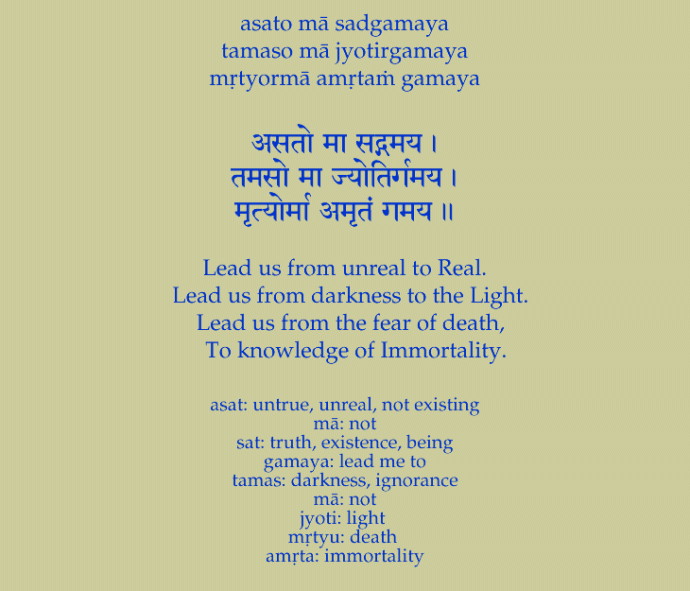
asato_ma

Categories: Yoga | Tags: , , , , , | Leave a comment

Planting Your Seeds of Intention

When you are asked to set an intention in the beginning of a yoga class, it is more than just setting a goal. A goal comes with a sense of achievement, or a sense of failure…

When you set an intention, it is something bigger. Something larger than for your small self. Something for the greater good of the world. Like when we chant Lokah Samastah Sukhino Bhavantu – may all beings (human beings, animal beings, plant beings, even green beings…all beings) be happy and free. And may the thoughts, words and actions of my own life contribute to that happiness and freedom for all. Or setting an intention of the attainment of yoga – enlightenment – for all beings. Every ounce of your being is dedicated to that intention. You take ownership of your thoughts, words and actions when you release them into the world.

Your intention is similar to a seed. If you hold onto that seed, nothing will happen to it. But if you plant that seed, it will turn into a flower, and then a tree, and then that tree will bear fruit, and that fruit will feed other beings, and more seeds will be born. And similar to how nature will just take over and flourish, once you set your intention, the universe will take over. There is no need to worry about it – let nature take its course and trust that if you truly believe, truly believe , in your intention, it will be. When you release your intention out into the world, it will spread. If you treat yourself and others as a holy being, others in turn will do the same. Happiness and freedom will eventually spread like wild flowers. And it starts with your intention.

I leave you with a quote from Osho that I thought fit quite nicely with this sentiment…

“The seed cannot know what is going to happen, the seed has never known the flower. And the seed cannot even believe that he has the potentiality to become a beautiful flower. Long is the journey, and it is always safer not to go on that journey because unknown is the path, nothing is guaranteed.
Nothing can be guaranteed. Thousand and one are the hazards of the journey, many are the pitfalls – and the seed is secure, hidden inside a hard core. But the seed tries, it makes an effort; it drops the hard shell which is its security, it starts moving. Immediately the fight starts: the struggle with the soil, with the stones, with the rocks. And the seed was very hard and the sprout will be very, very soft and dangers will be many.
There was no danger for the seed, the seed could have survived for millennia, but for the sprout many are the dangers. But the sprout starts towards the unknown, towards the sun, towards the source of light, not knowing where, not knowing why. Great is the cross to be carried, but a dream possesses the seed and the seed moves.”

Categories: Yoga | Tags: , , , , , | Leave a comment

Blog at WordPress.com.